 Maana Wellness
Written by Shilpa Sunny. Reviewed for clinical accuracy by Jasmal K.
If you’ve looked at more than one Maana Wellness service page, you’ve probably noticed ESWT (Extracorporeal Shockwave Therapy) showing up more than once — in our Pain & Recovery, Performance, and Aesthetic & Body programs. It’s the same device and the same underlying mechanism every time. What changes is the goal it’s being used for, and how strong the evidence is behind each specific use. Here’s the honest breakdown of all three.
The Mechanism Is the Same Everywhere
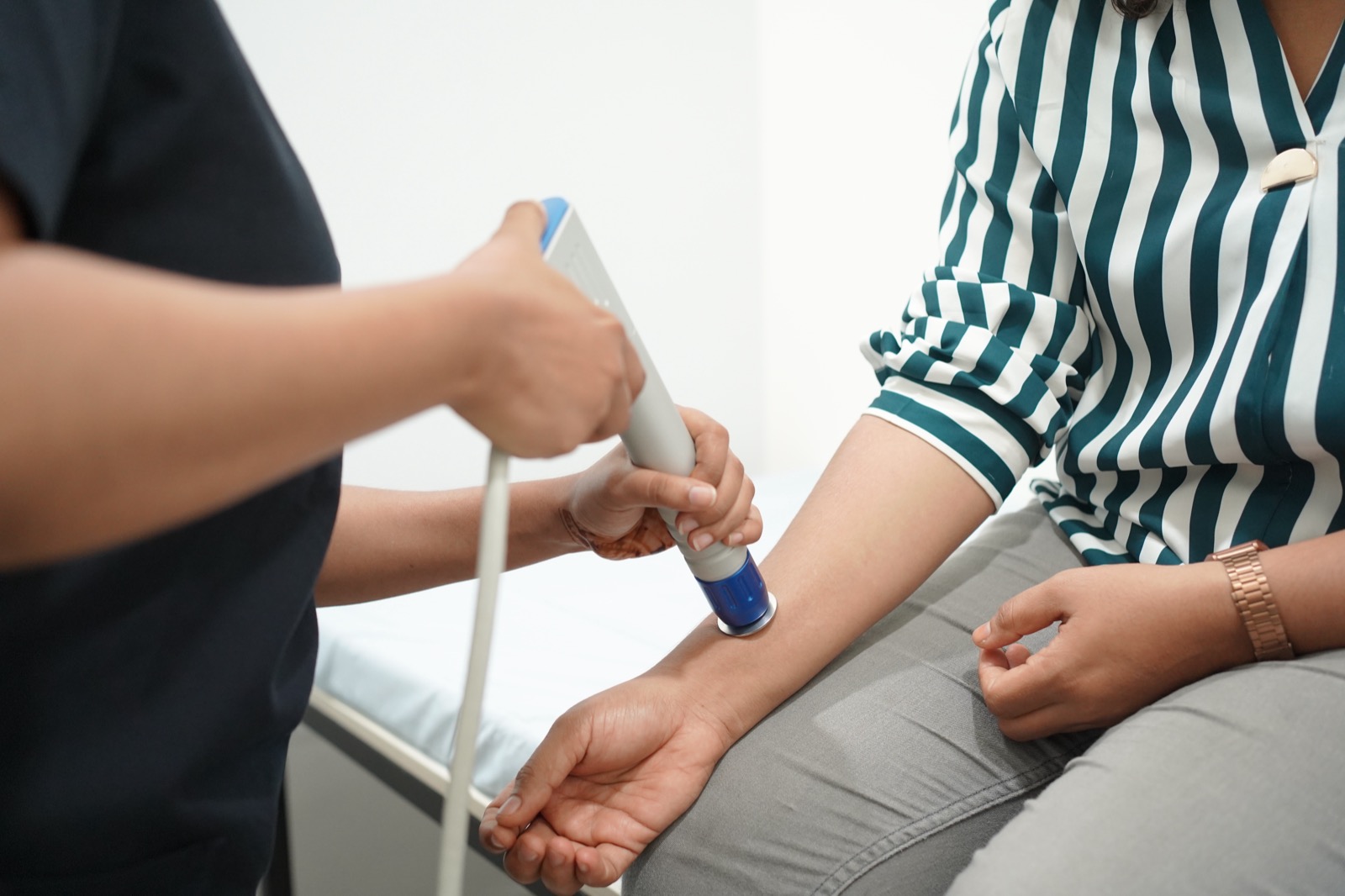
ESWT delivers focused, high-energy acoustic waves into a treatment area through a handheld device. Unlike manual therapy, the intensity and depth of each session is consistent and device-controlled rather than dependent on a therapist’s hands that day. Everything below builds on that one mechanism — the difference between the three uses is the tissue target and the goal, not the technology.
Pain & Recovery: Releasing Trigger Points
This is where ESWT has the strongest, most independently repeated evidence of the three uses. A 2022 systematic review and meta-analysis pooled 8 controlled studies covering 571 patients with myofascial pain syndrome and found ESWT reduced pain and disability scores. A 2020 review of 10 studies and 477 patients focused specifically on trapezius (neck and shoulder) pain found a clear, statistically significant reduction in pain versus sham treatment — though when compared directly against dry needling or trigger point injections, the improvement wasn’t statistically significant. In plain terms: ESWT reliably beats doing nothing, but the evidence doesn’t clearly show it beats other real manual treatments — they’re different, reasonably evidenced approaches, not one proven superior to the other.
Performance: Recovery Support for Active Bodies
In our Performance program, ESWT is paired with EMS and physio-led stretching for weekend athletes, regular gym-goers, and anyone managing recurring tightness between training blocks. Here it’s used the same way as the Pain & Recovery application — targeting recurring tight spots — just inside an ongoing training context rather than a one-off complaint. The evidence base is the same trigger-point research above; nothing about the performance setting changes the mechanism.
Aesthetic & Body: Part of a Combined Toning Program
Here’s the one place the framing genuinely shifts, and it’s worth being precise about it. In our Body Toning & Shaping program, ESWT is combined with localised cryotherapy and EMS to work a targeted area from three mechanisms at once. The trigger-point research above is about myofascial pain, not body contouring — so the toning use isn’t backed by that same evidence base on its own. It’s included because of the tissue-stimulating mechanism it shares with the other two modalities in the combination, not because ESWT alone has been shown to reshape or reduce fat in an area. That’s why this program is described as body toning and shaping, not weight loss — for weight loss specifically, our Acceptance-Based Behavioral Therapy + EMS program is the one built for that.
Which One Is Actually Right for You
The honest answer is that it depends entirely on your goal, not on the modality — a trigger point causing pain, an athlete’s recurring tight spot, and a targeted shaping goal are three different conversations, even though ESWT can be part of the answer to all three. That’s a consultation question, not a self-diagnosis one.
Read the full evidence review on ESWT for trigger points →
Explore the three programs ESWT is part of: Pain & Recovery, Performance, and Aesthetic & Body. ESWT is available at all five Maana Wellness locations, including our Kochi clinic.