 Maana Wellness
Does the Pelvic Floor Chair Actually Work? Here’s What the Research Shows
Written by Shilpa Sunny. Reviewed for clinical accuracy by Jasmal K.
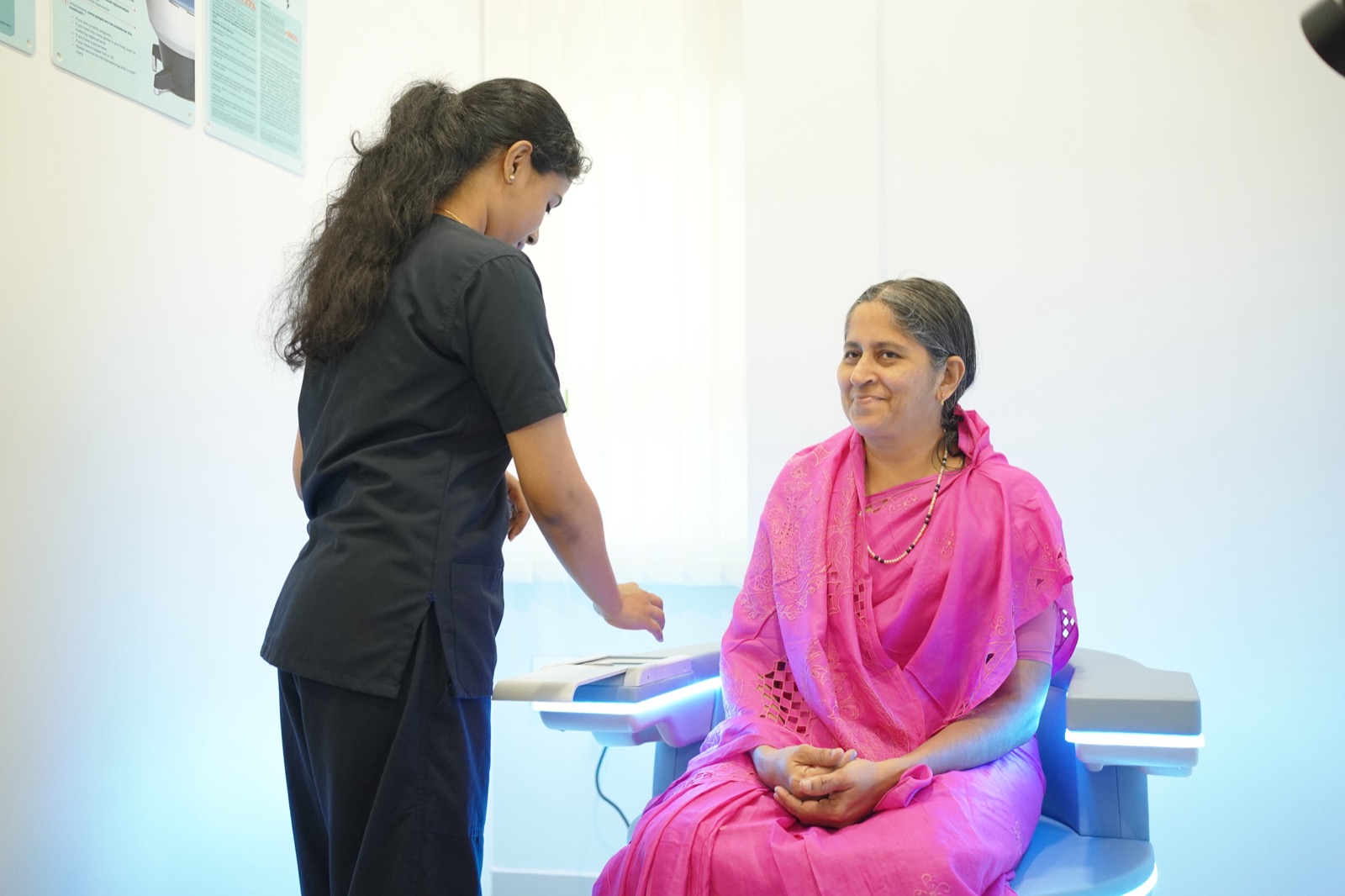
The technology behind the pelvic floor chair — high-intensity focused electromagnetic stimulation — has a real and specifically positive evidence base for stress urinary incontinence, backed by both patient-reported outcomes and objective physiological measurements.
The Short Version
Multiple randomized and pilot-randomized controlled trials have found that HIFEM technology improves stress urinary incontinence symptoms, both on validated questionnaires and on objective urodynamic testing. The device category has FDA clearance specifically for non-invasive electromagnetic pelvic floor stimulation. The honest caveat: most individual trials are small, protocols vary across studies, and researchers in the field themselves are calling for larger, more standardized comparative research.
What the Research Shows
FDA clearance: The BTL EMSELLA device — the HIFEM device most represented in this research — is cleared by the U.S. Food and Drug Administration for non-invasive electromagnetic stimulation of pelvic floor musculature, for rehabilitation of weak pelvic muscles and restoration of neuromuscular control in male and female urinary incontinence.
A randomized controlled trial (published in the International Journal of Women’s Health, Dove Medical Press) compared HIFEM combined with pelvic floor muscle training (PFMT) against PFMT alone in women with stress urinary incontinence. Both approaches improved symptoms — but the combined HIFEM + PFMT group showed significantly better results on electromyography measurements and on three validated clinical questionnaires (UDI-6, ICIQ-SF, and the King’s Health Questionnaire).
A pilot randomized controlled trial (ScienceDirect) in mothers with incontinence found both HIFEM + PFMT and PFMT alone improved quality of life and bladder control, with the combined HIFEM group showing a significantly greater reduction in urine leakage. The authors were explicit that these are preliminary pilot findings intended to support progression to a larger, definitive trial — an appropriately cautious framing worth preserving here.
A clinical study at Kaohsiung Medical University Hospital (published via PMC) followed 19 women through six sessions of HIFEM treatment and found significant improvement across multiple validated incontinence questionnaires (OABSS, UDI-6, IIQ-7, ICIQ), alongside objective urodynamic changes — increased maximum urethral closure pressure and urethral closure angle — at a 6-month follow-up. This study is notable for pairing patient-reported improvement with objective physiological measurement, which strengthens confidence that the effect is real and not purely a placebo or reporting effect.
The Honest Limitations
- Most individual trials are small — typically a few dozen participants, which is common in this specific research area but still limits statistical certainty compared to larger drug or device trials.
- Protocols vary considerably across studies, and a recent review of this literature explicitly noted that objective assessments of pelvic floor muscle function remain limited across the field as a whole, calling for further comparative research using more objective outcome measures.
- Several of the strongest studies are described by their own authors as pilot or preliminary work, intended to justify larger trials rather than serve as final proof.
The Bottom Line
Of the modalities we’ve reviewed, this is one of the more consistently positive evidence pictures — multiple independent trials, FDA clearance, and a study that paired symptom improvement with objective physiological measurement rather than relying on self-report alone. The honest caveat is one of scale, not direction: the studies are real and mostly positive, but they’re still individually small, and the field’s own researchers are actively calling for bigger, more standardized trials to firmly settle the size of the effect.
References
- Study Details, NCT04031014: High Intensity Focused Electromagnetic Field Device for Urinary Incontinence. ClinicalTrials.gov. clinicaltrials.gov/study/NCT04031014
- Comparison of High-Intensity Electromagnetic Therapy and Pelvic Floor Muscle Training. International Journal of Women’s Health, Dove Medical Press. dovepress.com
- Effects of High-Intensity Focused Electromagnetic Therapy (HIFEM) With Pelvic Floor Muscle Training in Mothers Living With Incontinence: A Pilot for a Randomized Controlled Trial. ScienceDirect. sciencedirect.com/science/article/pii/S1049386725001604
- Effect of High-Intensity Focused Electromagnetic Technology in the Treatment of Female Stress Urinary Incontinence. PMC. pmc.ncbi.nlm.nih.gov/articles/PMC11673164