 Maana Wellness
Does HBOT Actually Slow Aging? Here’s What the Research Shows — and Where the Marketing Goes Further
Written by Shilpa Sunny. Reviewed for clinical accuracy by Jasmal K.
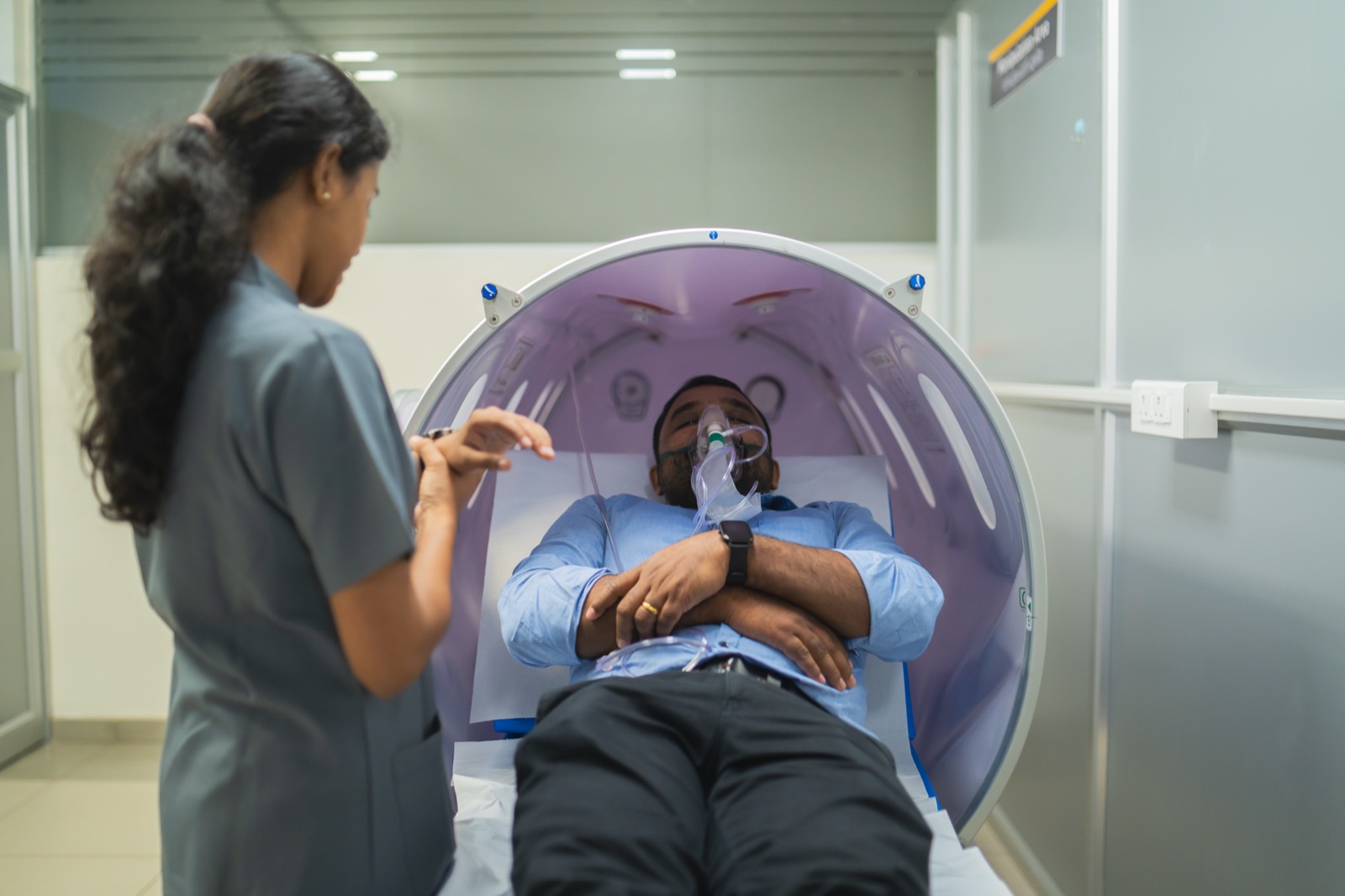
There’s real, peer-reviewed research behind HBOT’s effect on specific aging-related biomarkers. There’s also a genuine gap between what these studies measured and the “reverses biological aging” language used to sell the idea commercially — including by people connected to the original research.
The Short Version
Two studies from the same research group at Shamir Medical Center in Israel found that HBOT significantly changed specific, measurable markers of cellular aging: telomere length and senescent (“zombie”) cell counts in blood, and collagen density and blood vessel count in skin. Both are real, statistically significant findings in peer-reviewed journals. What they don’t establish is that HBOT “reverses aging” as a whole — that’s a much bigger claim than a specific biomarker study can prove, and it’s worth knowing that even the studies’ own lead researcher has used that stronger language in commercial contexts.
What the Research Shows
Telomere and cellular senescence: Hachmo et al. (2020), published in the journal Aging, studied HBOT’s effect on blood cells in a trial of 35 participants. The treatment protocol was 60 daily sessions over three months, breathing 100% oxygen in a pressurized chamber. The study found a significant increase in telomere length (the protective caps on chromosomes that shorten with age) and a significant decrease in senescent cells — aging cells that no longer function properly and are sometimes informally called “zombie cells.”
Skin aging and collagen: Hachmo et al. (2021), also published in Aging, studied the same broader 70-participant cohort, but the skin-specific findings come from a much smaller sub-group: only 13 participants consented to repeated skin biopsies. Within that small sample, HBOT was associated with a significant increase in collagen density, elastic fiber length, and blood vessel count, along with a significant decrease in fiber fragmentation and senescent cells in skin tissue.
Both studies used the same research team, the same medical center, and the same general protocol (60 daily sessions, 90 minutes per session, 100% oxygen). This is worth noting because it means the evidence base, while real, comes from one specific research group rather than being independently replicated by unconnected teams.
Where the Science Stops and the Marketing Starts
This is the most important thing to get right on this page. The lead researcher on these studies has gone on to develop a commercial “longevity” clinic program built on this research, and in that commercial context has used language like describing the findings as evidence that “aging can, indeed, be targeted and reversed at the basic cellular-biological level.”
That specific claim — reversing aging as a whole — is a bigger leap than what the underlying studies actually show. What the peer-reviewed papers demonstrate is real and specific: measurable, statistically significant change in a small number of biomarkers (telomere length, senescent cell counts, skin collagen density) in small samples (35 and 13 participants respectively) over a defined treatment period. What they don’t include is long-term outcome data — disease incidence, functional decline, lifespan, or broader multi-system aging measures — which would be needed to support a claim about “reversing aging” in the fuller sense most people mean by that phrase.
This is a useful example of the gap between what a study measures and what gets said about it once it’s commercialized — worth naming directly, since our whole positioning depends on not making that same leap ourselves.
The Honest Limitations
- Both key studies come from one research group and medical center, not independently replicated evidence.
- The skin/collagen findings are based on just 13 participants — a very small sample for a claim this specific, even though the statistical results within that sample were significant.
- These are biomarker studies, not outcome studies. They measure changes in specific measurable indicators associated with aging, not broader outcomes like disease rates, functional capacity, or lifespan.
- “Reversing aging” is a claim made in commercial marketing, not a claim the peer-reviewed papers themselves make — the papers describe modulating specific pathophysiology, a narrower and more defensible claim.
The Bottom Line
The underlying research here is real, peer-reviewed, and shows genuine, statistically significant effects on specific cellular aging markers. The honest position is to cite exactly that — specific, measurable biomarker changes in small studies — rather than reaching for the broader “reverses aging” framing that’s become common in the wellness industry, including from sources connected to the original research itself. This is precisely the kind of distinction “wellness with evidence” should be built on: citing real findings accurately, even when a more dramatic version of the claim is readily available and being used by others.
References
- Hachmo Y, Hadanny A, Abu Hamed R, et al. Hyperbaric oxygen therapy increases telomere length and decreases immunosenescence in isolated blood cells: a prospective trial. Aging, 2020. ncbi.nlm.nih.gov/pmc/articles/PMC7746357
- Hachmo Y, Hadanny A, Mendelovic S, et al. The effect of hyperbaric oxygen therapy on the pathophysiology of skin aging: a prospective clinical trial. Aging, 2021. ncbi.nlm.nih.gov/pmc/articles/PMC8660605