 Maana Wellness
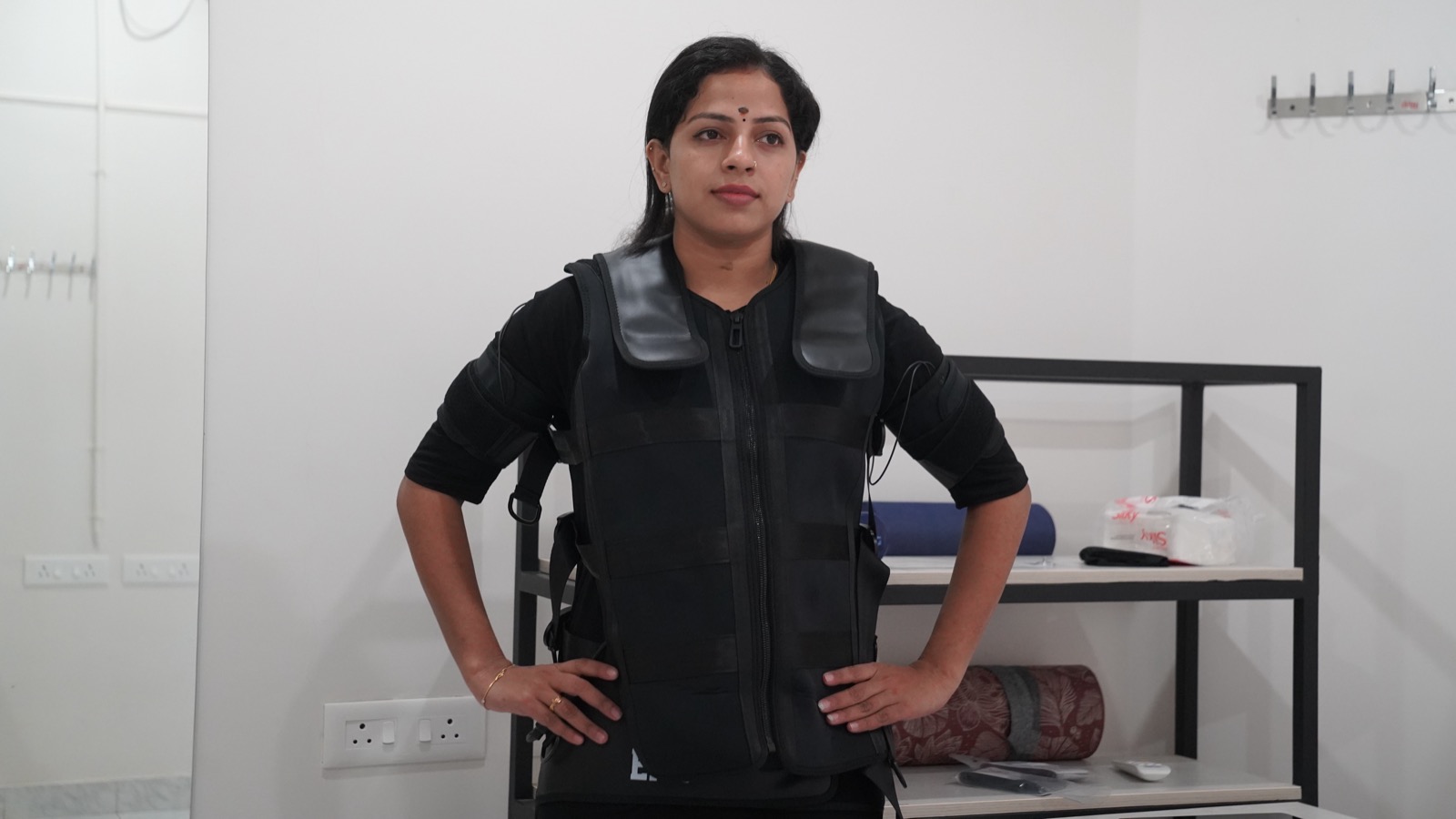
Electrical muscle stimulation (EMS) suits look dramatic — a full-body vest wired up to deliver electrical pulses while you exercise — and dramatic-looking equipment tends to attract dramatic marketing claims. So does EMS actually build muscle, or is this another case of the technology outrunning the evidence?
The Short Answer: This Is One of the Better-Evidenced Modalities We Offer
Of everything we’ve reviewed across our evidence pages, EMS for muscle strength and mass has one of the stronger, more statistically convincing evidence bases — large effects, a proper meta-analysis, and a large combined sample size. A 2021 systematic review and meta-analysis found large, statistically significant gains in muscle mass and strength from whole-body EMS training.
The Honest Caveat
The caveat that has to stay attached to every claim: this is muscle-building and strength evidence, not fat-loss evidence, and the strongest research applies most directly to less-trained populations rather than already-active athletes. If your goal is specifically fat loss, EMS on its own isn’t the mechanism for that — it’s included in our programs as physical support alongside other components, not as a stand-alone fat-loss tool.
Read the full evidence review on EMS for muscle strength →
Where EMS Shows Up in Our Programs
We use EMS across a few different goals, and it’s worth knowing which one applies to you:
- Weight Management — EMS paired with Acceptance-Based Behavioral Therapy (ABT), supporting muscle toning and lean muscle maintenance alongside a dietician-led behavioral program. Part of our Weight Management program; EMS is support to the behavioral program here, not a stand-alone weight-loss mechanism.
- Aesthetic & Body — EMS combined with ESWT and localised cryotherapy in our Body Toning & Shaping program, for non-invasive toning and shaping in targeted areas.
- Performance — EMS alongside ESWT and physio-led stretching in our Performance program, supporting active adults and athletes between training sessions.
What a Session Actually Involves
You wear a fitted electrode vest that delivers electrical pulses to major muscle groups during guided movement, typically supervised by a physiotherapist rather than left to run unattended. Session length and frequency depend on which program you’re following — your physiotherapist sets the specifics based on your goals during your consultation, rather than a fixed one-size package.